

What do you think when you imagine yourself in a space like this?
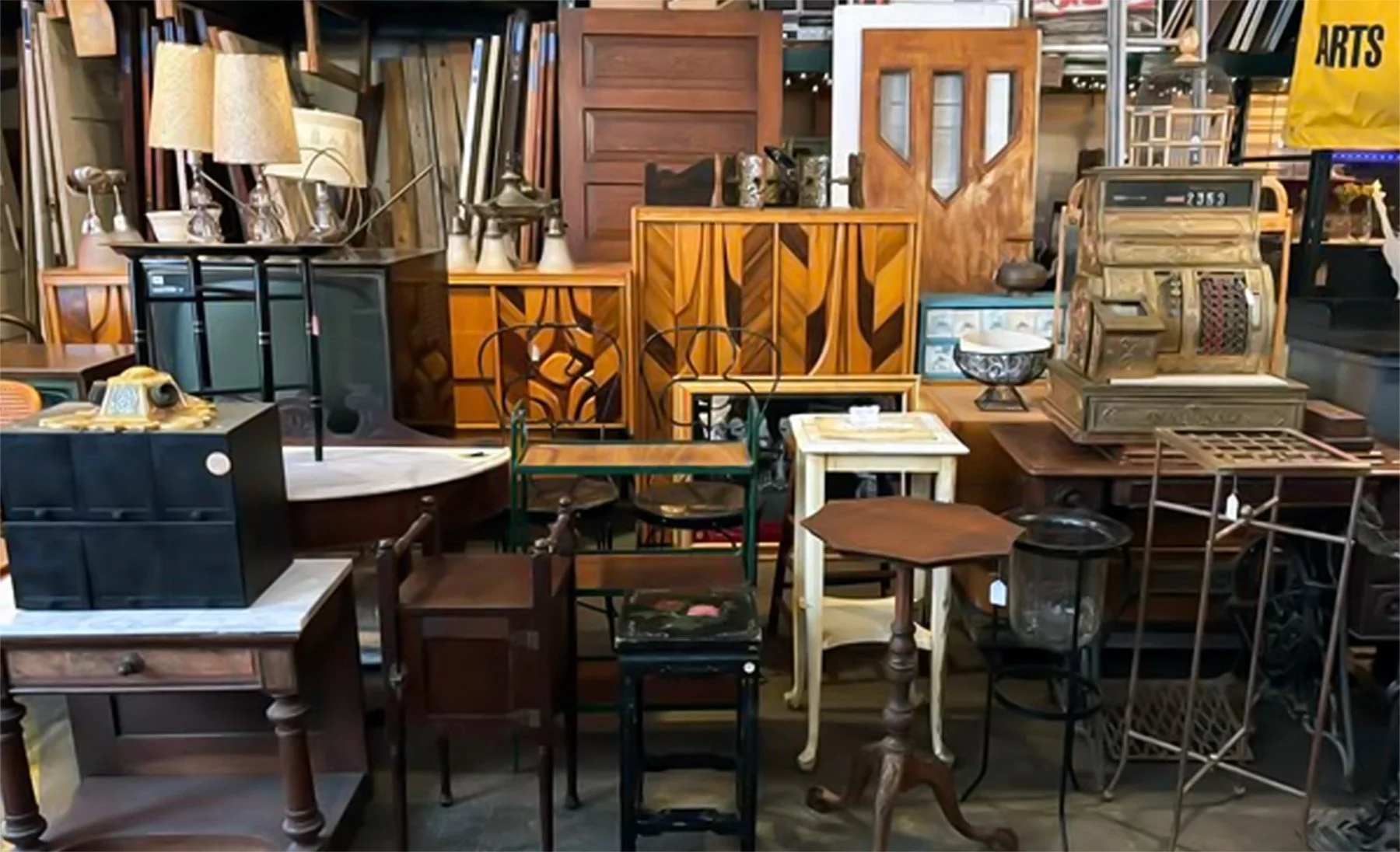
Detroit Urban Artifacts, Detroit MI
Maybe you think of sneezing because of the dust, imagine spiders crawling up your leg, or remember that musty smell that hits when you open the door to a long-closed space.
All I see is possibility.
I love old things: estate sale finds, salvaged architectural elements, the forgotten objects that still have so much life left in them beyond the scratches, dents, and flaking paint. To me, these pieces aren’t junk they’re time travelers with embodied history. They’re full of character, texture, and soul that you can’t fake with something brand new.
Restoring Furniture is Sustainable and Economical
Over the years, I’ve realized that my draw to vintage and antique objects goes far beyond aesthetics or practicality. It’s rooted in an instinctive appreciation for their beauty, history, and soul. This instinct extends to a wide range of design elements that bring character and authenticity to a space. From furniture to antique Persians and picture frames, vintage art even throw-pillows crafted from kilim rugs. It’s about honoring the craftsmanship and stories embedded in these treasures while giving them new life in a modern context.
Refurbishing and repurposing well-made elements is often more economical than buying new, keeps quality materials out of the landfill, and reduces the carbon footprint associated with manufacturing and shipping new furniture. When I was young and finally had the opportunity to furnish my own apartments then homes, I was driven by a combination of expensive taste and tight budget. Hunting for pre-loved objects was both a necessity and creative challenge. I found myself drawn to the authenticity, intricate design details, and craftsmanship of vintage and antique furniture, qualities that are often absent in mass-produced items. Here's the thing: buying and restoring that vintage dresser often costs less than a new one, but the quality doesn't even compare. It’s an opportunity to own truly exceptional pieces, the kind built with materials and methods that would be prohibitively expensive, if made today. The result? High-quality treasures that grow more beautiful with age.
These days all too often “new” means fast furniture constructed with particle board held together with hope and dowels that strip the first time you move. The fast furniture industry, which exploded with the rise of e-commerce giants like Wayfair and IKEA, has conditioned consumers to prioritize price over quality. This business model relies on cheap materials like MDF and particleboard, which lack the durability of solid hardwoods and are rarely recyclable. This cycle of disposable furniture contributes to the 12 million tons of waste added to U.S. landfills each year. Compare that to a mid-century dresser built with solid wood and dovetail joints, something that's already survived 60 years and will easily last 60 more.
This love for salvaging also influences how I approach architectural details. I prefer to maintain, restore, or recreate elements that are historically relevant to the project, ensuring the design feels authentic and connected to its history. Whether restoring intricate plaster moldings, refinishing original woodwork, or sourcing salvaged doors, I believe these details are what make a space truly special.
As my career evolved, I began integrating my passion for authentic design elements into my hospitality and single-family residential projects, with clients who have healthy budgets. While I have the ability to source new, high-end furnishings, I still follow my instinct to hunt for existing pieces and materials. The authenticity, quality, and soul of pre-loved objects resonate in a way that new items rarely do. Whether a statement piece that added a sense of history to a space or a restored heirloom that brought warmth and individuality, I found these elements resonated with clients and elevated the design.
By choosing to restore vintage and antique furniture, you’re reducing waste, investing in pieces that can last for generations while supporting a sustainable, local economy. Every salvaged treasure that needs restoration becomes an opportunity to support skilled local artisans; upholsterers, refinishers, woodworkers, and metalworkers who have spent years honing their craft. These professionals are the backbone of sustainable design, ensuring that traditional craftsmanship thrives in a world increasingly dominated by mass production.
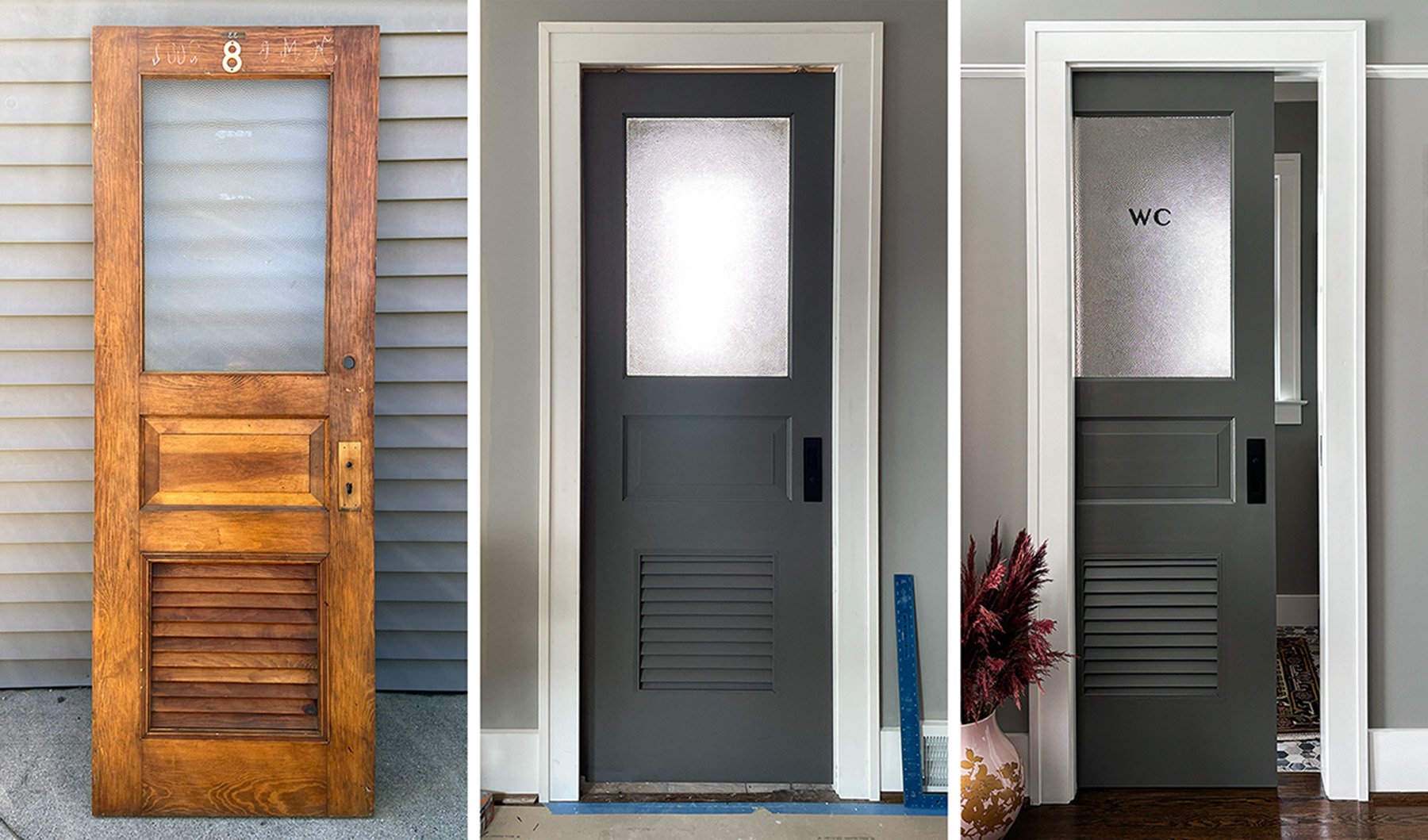
Door from Detroit Urban Artifacts
Refurbishment by Andrej Golovan, Carpenter Craftsman
Finding Potential in Forgotten Pieces
When I walk through a salvage warehouse in Chicago, wander through a Berlin flea market, explore an antique store in Paris or pull over for a local estate sale in Detroit, I’m not seeing what’s broken. I’m seeing what could be. The craftsmanship, the materials, the proportions all of it has potential. Beyond the environmental and economic impact, there’s a joy in knowing these salvaged pieces are often one of a kind. They become the details that set your home apart, the reason a space feels personal rather than from a catalog. It’s so much more fun to answer, “Where did you get that piece?” with a story about a dusty warehouse, a Saturday morning estate sale, or a treasure found in a Lisbon street market, instead of texting them a link to a website.
These pieces carry stories that new furniture simply can't replicate, the patina of age, the marks of use, the evidence of care from previous owners. When you bring them into your home, you're becoming a part of their continuing narrative.
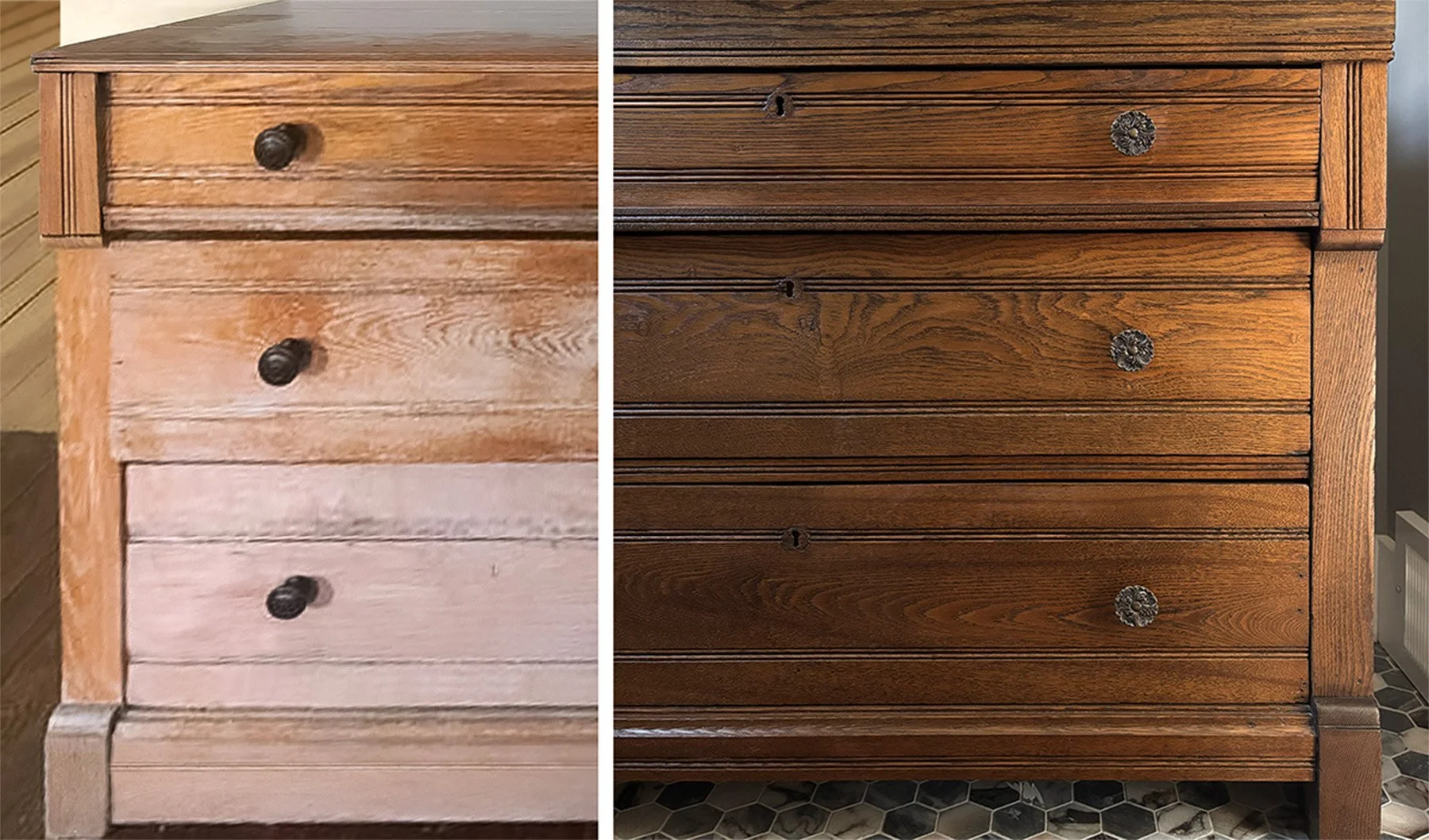
Restoration by Andrej Golovan, Carpenter Craftsman
Transforming Heirloom Furniture for Modern Homes
Some of my most meaningful projects have included helping clients rework a beloved heirloom that doesn’t quite fit their home’s aesthetic. A dining table with great bones but a dated finish, a vintage chair that needs new upholstery, a cabinet with beautiful proportions but tired hardware, these are opportunities to honor the past while keeping it functional in the present.
I've worked with clients who inherited their grandmother's antique pie safe but couldn't figure out how to make it work in their newly renovated mid-century home. A local woodworker meticulously stripped away the original varnish, which had yellowed over time, and applied a clear coat that enhanced the natural tone and grain of the wood. The shelving was repaired to restore functionality, while the original hardware was cleaned and restored. To complete the transformation, I custom-designed new leaded glass panels in collaboration with a local stained-glass artist. We transformed this beloved piece of family history into a statement piece that honored its history while fitting seamlessly into their space. They got to keep that family connection without compromising their design vision. That's the beauty of thoughtful restoration.
Another project involved salvaging a solid oak and glass door from Detroit Urban Artifacts, originally removed from an old military academy. The door’s stain was worn off in many places, and its privacy glass was caked with decades of grime, but its proportions were elegant and enduring. After a careful repair and refinishing process, the door was transformed into a pocket door for a washroom—a simple, beautiful solution that feels deeply connected to the past.
What started as a creative impulse has grown into a conscious, sustainable design practice. I see the opportunity to save something with history, to make it beautiful again, and to do it in a way that feels aligned with how I want to live and work. That’s the heart of my approach to design: slowing down, paying attention, and finding beauty in what’s already here. Because sometimes, the most inspiring thing you can do is start from what’s been left behind.
Custom Furniture Restoration Services
If you have a piece with potential, a cherished heirloom or salvaged find, I'd love to help you see it with fresh eyes. Diagram can oversee every step of its transformation. From custom refinishing to reimagined design details, we ensure every piece feels perfectly at home in your space and tailored to your lifestyle.
We also collaborate with fellow designers to source, restore, and reimagine pieces for their clients.
Let's create something meaningful together!
